Brig Gen Kennard R. Wiggins, (DE ANG Ret.)
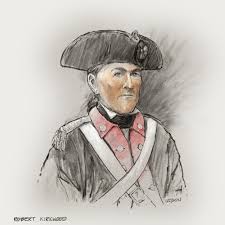
Robert Henry Kirkwood
(Courtesy of the American Battlefield Trust)
On June 15, 1775, Delaware declared its independence from both Great Britain and Pennsylvania, from which it had previously been known as the ‘Three Lower Counties’. Only six months later, the Continental Congress called on Delaware to raise a regiment for one year’s service in the Continental Army. The “Delaware Blues” were well-uniformed, disciplined, and armed with new muskets. It was led by Colonel John Haslet and was formed in January 1776 of eight companies of about 750 men. Robert Kirkwood and his friend Peter Jaquett would answer the call and be appointed as lieutenants in the new regiment. They were fated to serve in some 32 combat engagements over the next seven years.
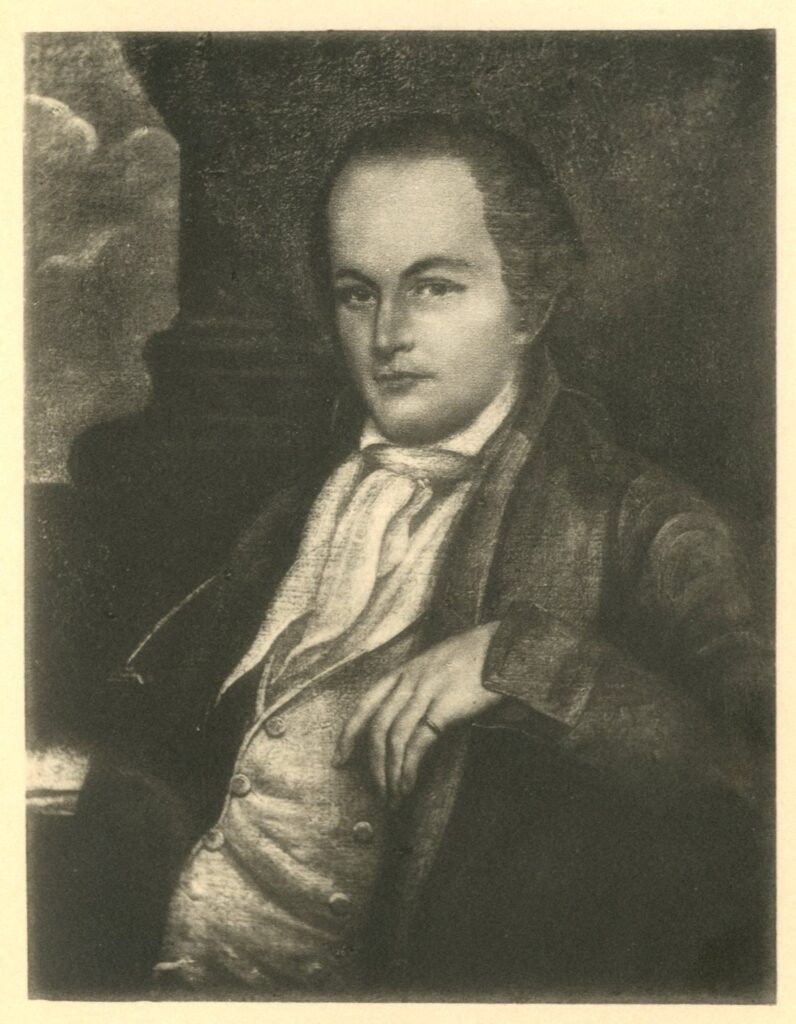
(Courtesy of the Delaware Sons of the American Revolution)
The first major engagement was at Long Island, where Delaware fought with distinction alongside Smallwood’s Maryland Regiment, gallantly covering Washington’s retreat. The regiment came out of the campaign with a well-earned reputation for coolness under fire. Colonel Haslet’s original regiment was disbanded after one year, as their term of service expired, after the Battle of Trenton. Kirkwood and Jaquett were instrumental in raising a second Delaware regiment for the duration of the war under Colonel David Hall.
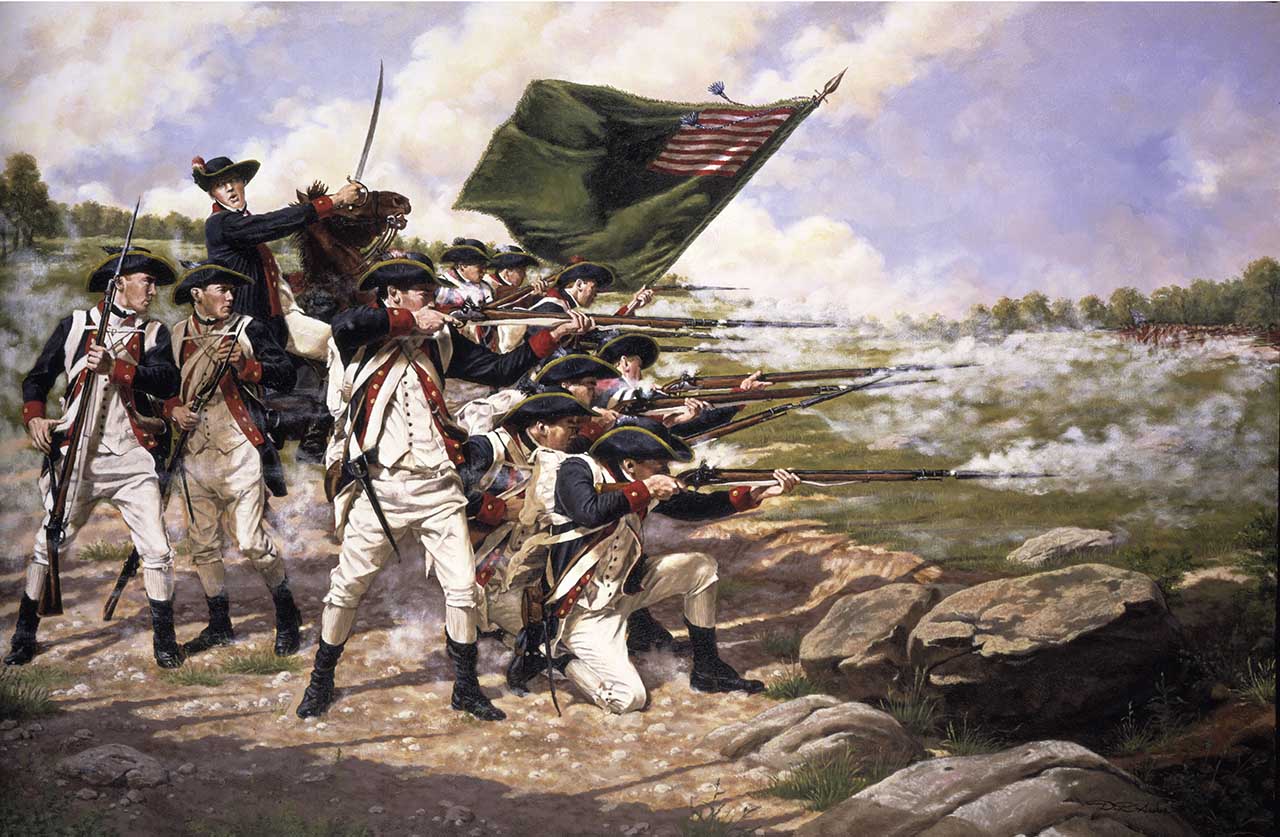
(Courtesy of the Army Historical Foundation and Domenick D’Andrea)
In 1780, when the war shifted to the South, all General Washington could safely spare were the Maryland and Delaware regiments augmented by Virginia artillery, led by General Horatio Gates. At the disastrous Battle of Camden, South Carolina, in August 1780, a smaller but more disciplined force of redcoats outflanked the patriots. Delaware lost about a third of its force, including its top leadership. Kirkwood and a handful of remaining fellow officers organized a breakout with about sixty Continentals. What remained were two companies that were organized under Captains Kirkwood and Jaquett for the duration of the war, merged into the Maryland Regiment.
Kirkwood earned an extraordinary combat record. His troops were some of the most seasoned veterans in the army. They were regarded as an elite unit and would play a key role in General Nathanael Greene’s southern campaigns.
William Seymour wrote of the Delaware regiment that “all the officers and men behaved with uncommon and undaunted bravery, but more especially the brave Captain Kirkwood and his company…”
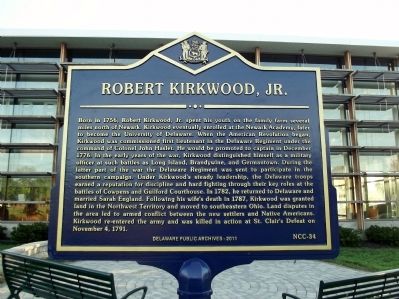
(Courtesy of the Historical Marker Database)
Kirkwood personified the qualities of the regiment as a whole. After enduring many hardships and tasting more defeat than victory, the unit became a hardened, dependable group of veterans who were the steady and experienced anchor relied upon by leadership. In almost every written mention by soldiers of the time, they described the charismatic Kirkwood as “gallant, brave, intrepid, with an unsullied reputation”. Kirkwood provided a model for the Army to follow as a combat infantry leader. Kirkwood would perish in his 33rd combat engagement at the Battle of Miami against native Americans in 1791 on the Western frontier.
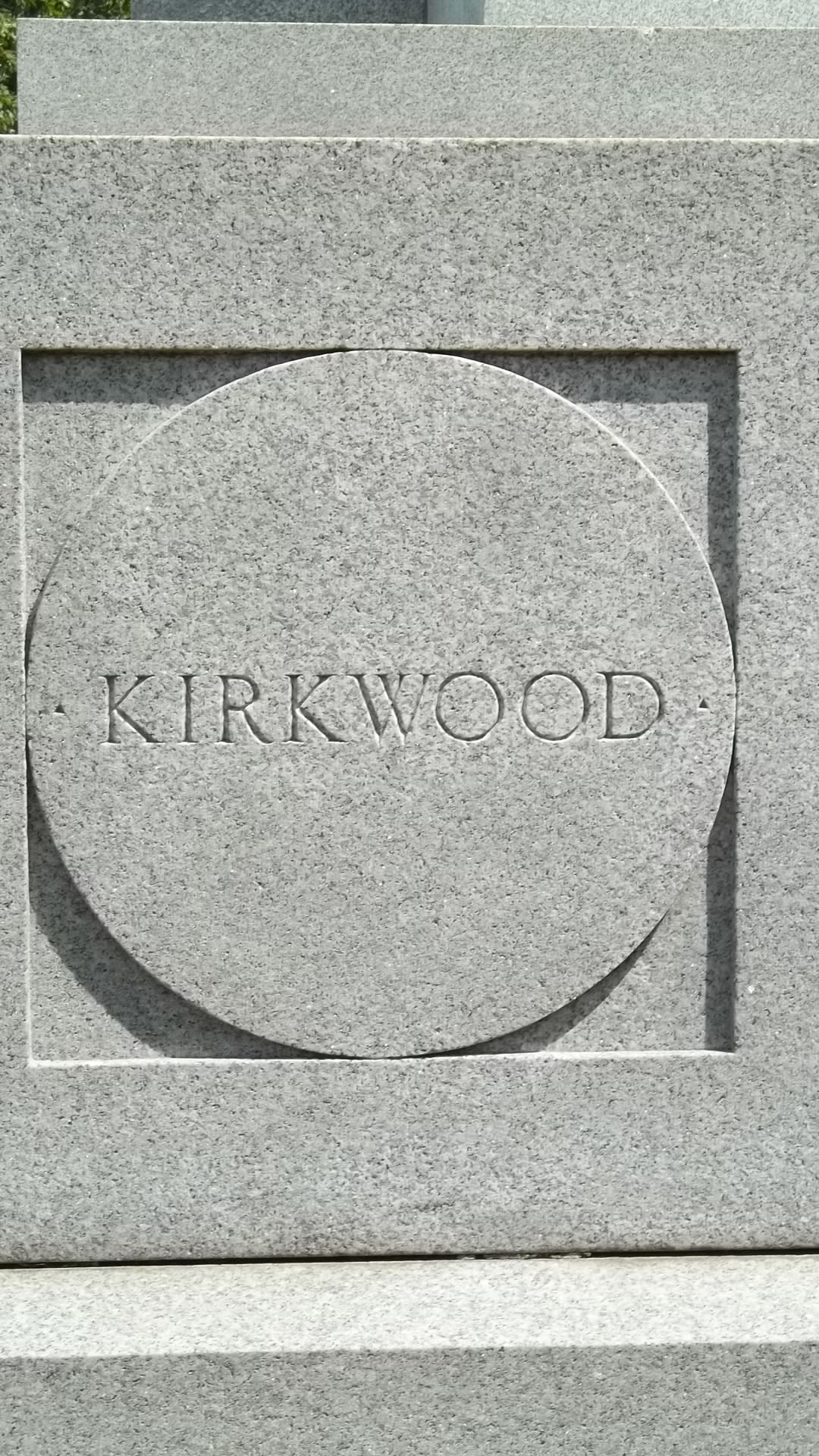
(Courtesy of Findagrave)

